
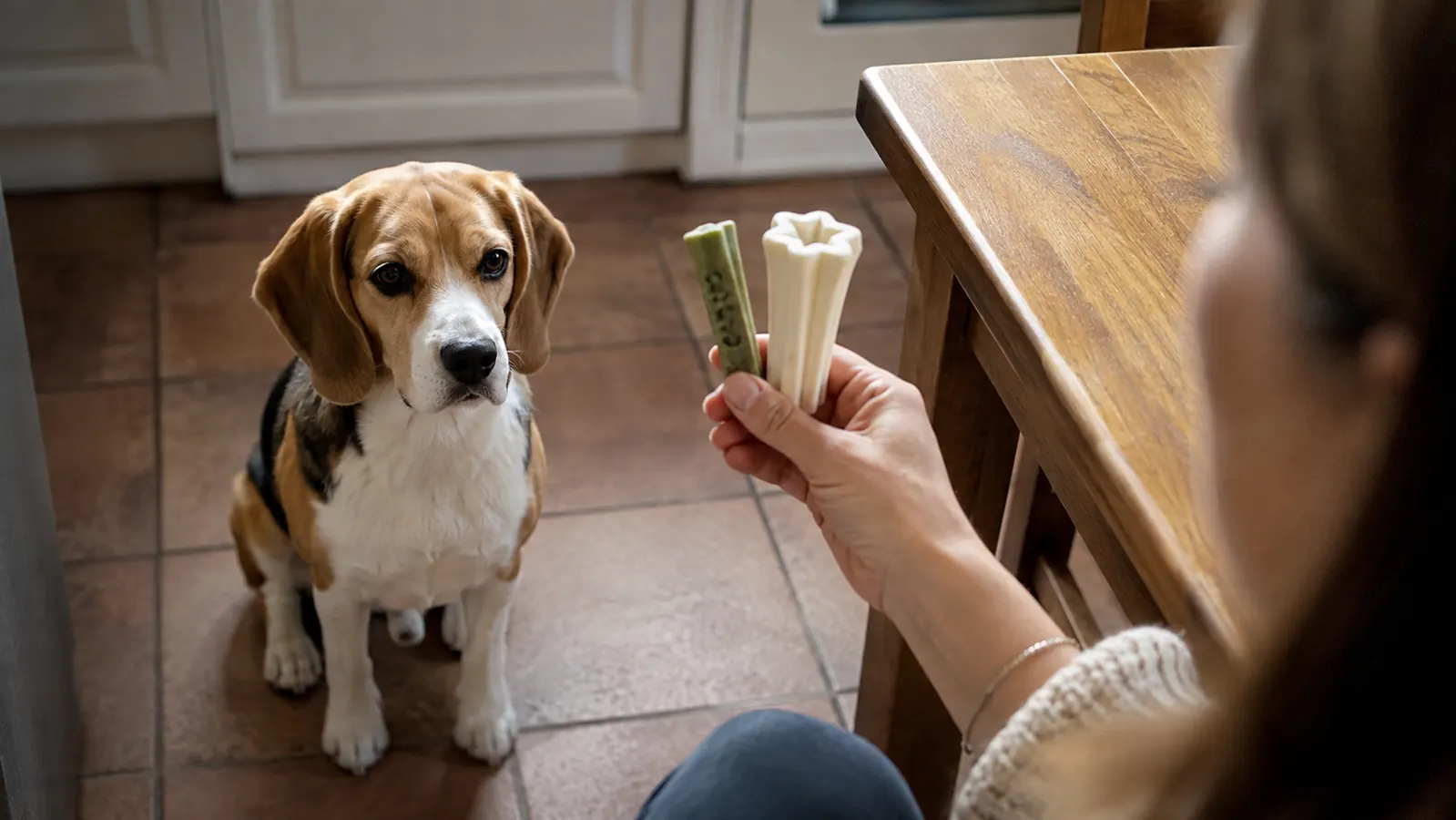
If you have a small dog, you have probably stood in the pet aisle staring at the two dental chews that every store stocks: the green flexible sticks and the white star-shaped ones. I did this for years and honestly reached for whichever was on sale. It was not until my vet pointed at my beagle Toby's tan buildup last year and said we needed to actually do something between cleanings that I stopped guessing and fed both long enough to compare them for real.
The short answer is this. Greenies Teenie cleaned Toby's teeth better and I trusted them more, but they cost more, and I had to slow down and hand them to him so he would actually chew. Dentastix were cheaper and he loved the crunch, but they are built for a bigger chewing style and did less for the corners of his mouth. Here is the full comparison, with everything I noticed feeding both off and on over the better part of a year.
How They Compare at a Glance
Here is the simple table I wish I had when I was standing in that aisle. I put Greenies on the left because that is the one I ended up feeding every day. Both are daily dental chews, which means you are not supposed to give them as a once-in-a-while treat. They only work if your dog gets one close to every day, the way a person brushes twice a day.
| Greenies | Dentastix | |
|---|---|---|
| Best for | Small dogs about 5 to 15 lbs | Medium dogs about 15 to 30 lbs |
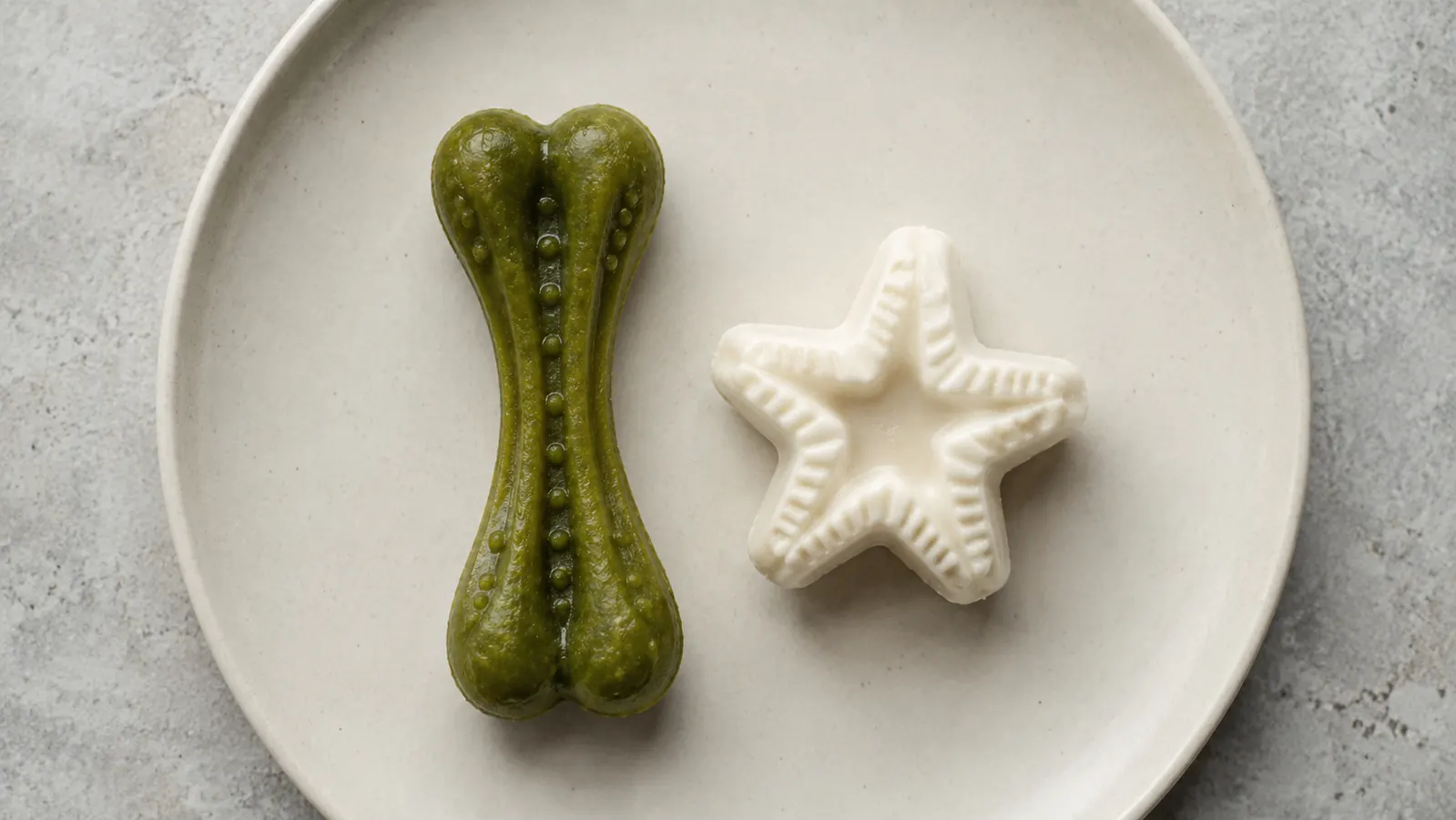
| Texture | Soft, flexible, dissolves as it works | Rigid, star-shaped, harder crunch |
| Cleaning claim | VOHC-accepted for plaque and tartar | Claims to help reduce plaque and tartar |
| Calories per treat | A touch higher, so I count them | Lower, easier on a small dog's daily count |
| Flavors | Chicken, peanut butter, and others | Beef, chicken, and others |
| Ease of giving | Hand-fed, I watch him chew it | He takes it and chews on his own |
| Cost per treat | Costs a little more up front, but that tub goes a long way | A little cheaper per stick |
Both treats work the same basic way. They are meant to rub against the teeth while your dog chews, and that rubbing is what loosens the soft film that hardens into tartar if you leave it alone. The difference is in how firmly and how long your dog actually chews, and that is where these two treats split apart in practice.
Want the treat that actually cleaned my beagle's teeth?
For small dogs, the flexible Greenies Teenie are the ones worth buying in the big tub. See today's price on Amazon and decide if the cost is worth the clean you can actually see.
Amazon Check Today's Price on Amazon →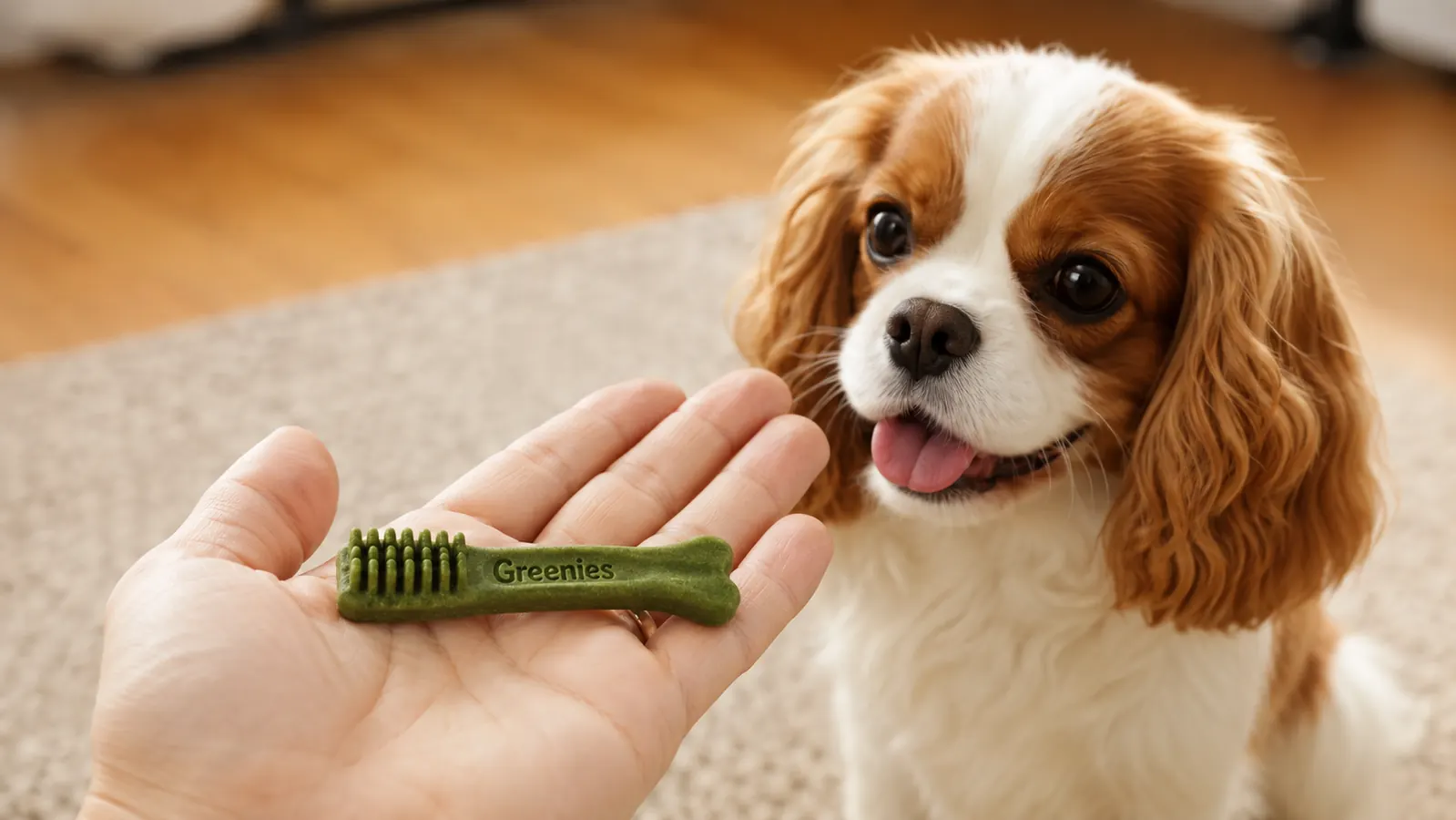
Where Greenies Wins
The biggest reason I switched to Greenies full-time is that the cleaning happened right where my vet said the problem was. Toby is a 13-pound beagle mix, and his worst buildup has always been along the back molars where a brush can barely reach. The Greenies Teenie is soft enough that he really works it, turning it over in his mouth instead of snapping and swallowing it in three bites the way he did with a harder treat. That longer chew time is the entire trick. The rubbing goes on longer, so more of the soft film comes off before he finishes.
They also carry the Veterinary Oral Health Council seal of acceptance, which is the independent check that a lot of dental products do not bother with. I am not a person who chases badges, but after a year of feeding these I can see the difference at his gumline, and my vet noticed at his last checkup that we had fewer trouble spots than the year before. The flexible texture is also the gentler choice for a dog his size. A small dog does not need a rock-hard chew. It needs one that works for a few minutes without risking a cracked tooth, and the soft dissolve feels like the safer of the two to me.
Where Dentastix Wins
I want to be fair, because Dentastix are not a bad treat and plenty of people swear by them. The obvious win is the price. In my store, the white sticks run a little less per treat than the Greenies, and when you are feeding one a day, that difference adds up over the course of a year. The Greenies tub costs more going out of the pocket at once, even though the per-treat number is not wildly different. If money is tight, that is a real consideration and I will not pretend otherwise.
The second win is that Toby genuinely loved the crunch. The rigid star shape uses up a certain kind of dog's chewing energy in a way the soft Greenies do not. For my sister's 22-pound Lab mix, Dentastix are the clear favorite, and they are sized more honestly for a dog with a bigger jaw. That is the real lesson here. Dentastix are built for a medium dog's chewing style. I had been forcing a small-dog-sized treat into a small-dog mouth that was happier with something softer, and that is not the product's fault. It is a sizing mismatch, and much of the online argument about which one is better is actually two people comparing the wrong sizes for their dogs.
What Is Actually Inside Each Treat
I read labels the way most of us do, which is to say I flipped the bags over and squinted. The short version is that both are made to be digestible enough that they break down in the stomach, which is important because a dog who wolfs down a treat is not going to chew it to dust. Greenies are wheat-based with chicken, and the flexible body is what lets them bend without breaking into sharp shards. Dentastix are also wheat and grain based, but stiffer, with starches and a grip texture that gives the crunch.
I am not going to stand here and tell you one is made of clean, magical ingredients, because neither one is a whole-food snack. They are dental tools in the shape of a treat, and the ingredients serve the mechanics of the tool. If your dog has allergies to wheat or chicken, that is the thing to check before either one, and your vet is the right person to ask. For a dog with no sensitivities, both are fine to feed daily within reason. The honest point is that the ingredient list matters less than the sizing question I keep coming back to.
The real difference is not Greenies versus Dentastix. It is buying the size and texture that match your dog's chewing style instead of grabbing whatever was on sale.
The Chewing Problem Nobody Talks About
Here is the thing nobody told me before I started. A dental treat only works if your dog chews it for the right amount of time, and most dogs do not come with a setting for that. Toby is a fast eater. Give him a softer treat and he will dispatch it in two minutes flat. That is actually the ideal for the Greenies, because those two minutes of bending and turning are what scrub the teeth. Give him a harder star chew and he will crunch it into pieces fast, gulp the pieces, and the whole thing is over before the teeth have been rubbed more than a few times.
This is why the feeding style matters as much as the product. With the Greenies I sit on the floor with Toby and hand him the treat, which slows him down because he is paying attention to me and not speed-running his snack. That little bit of patience turned the whole thing from a ritual I rushed through into one that actually moved the needle at his gumline. If your dog is a gulper like mine, no treat in the world will help unless you are willing to slow them down a little.
The Calories I Did Not Think About at First
Both treats add calories to a day that your dog is not burning much of, and I will not pretend I was careful about this at the start. Toby is a food-motivated beagle, which is a polite way of saying he would eat through the drywall if I let him. The Greenies run a touch higher per treat, and that matters when your dog is 13 pounds and every bite counts toward the line on the food bag. I started treating the daily chew as part of his food total instead of an extra, and his weight has stayed steady. If your dog carries extra weight, this is the number to watch no matter which brand you choose.
This is also where I remind myself that no treat replaces a brushing. The dental checkup Toby got was because brushing had turned into a three-person wrestling match in my house. The treats got us most of the way there, but my vet still wants him in for a proper cleaning on a schedule. A treat is a helper, not a fix. Anyone who tells you a chew is a full replacement for dental care is selling you something, and I would say that about either brand here.
What I Tried Before I Settled
Before I landed on a daily Greenies, I cycled through the other options people always bring up. I tried a water additive that goes in his bowl, and it did nothing I could see for the buildup, though it was easy. I tried raw bones and gave up because they made a mess on the rug and I worried about the hard edges. I tried a brush again and gave up again. The dental chews are the only option that Toby will sit still for every day, which is the entire point. The best dental routine is the one you can actually stick to.
So my honest advice is to look at your own dog before you get attached to one brand. If you have a medium dog who crunches happily and you are watching the budget, the Dentastix are a reasonable daily choice. If you have a small dog with buildup in the back like mine, the Greenies Teenie are worth the extra money because they actually did the job. And whichever you choose, slow the dog down, count the calories, and keep the real cleanings on the calendar.
Who Should Buy Which
Buy the Greenies Teenie if you have a small dog around 5 to 15 pounds, if you can hand the treat to your dog and watch them chew it for a few minutes, and if the independent cleaning seal matters to you. That is my situation, and it is what I would buy again. Buy the Dentastix instead if you have a medium or larger dog with a firm chew, if you want the lower per-treat cost, or if your dog simply will not slow down enough to work a soft treat and needs the crunch to actually chew it. Both are fine treats. The right one is the one matched to your dog.
Start with the treat sized for your dog
For a small dog, the Greenies Teenie are the ones that cleaned Toby's back molars. Check today's price on Amazon, and pick the size that matches your dog's weight, not the one on the endcap.
Amazon Check Today's Price on Amazon →