

Pearl started circling the way a person paces. Around her bed, back across, a paw at the corner, an unsatisfied huff, then around again. She is an 11-year-old German Shepherd mix, about 71 pounds, and her mornings have been getting stiffer for a while now. I watched that little dance for months and told myself it was just a habit. Then one night I actually looked at her bed. The middle had gone completely flat. She had been lying on a dent with edges for a long time, and I had not noticed, because she never once complained.
So the short answer, the one I wish someone had given me in plain words over the years, is this. Yes, there is a real difference between an orthopedic dog bed and a regular dog bed, and it is not a sales gimmick. It matters most for an older dog, a big heavy dog, or a dog who is already a little stiff. The Bedsure bed we switched her to changed her whole night, and I will get to the honest comparison below. For a young, healthy dog who will sleep just about anywhere, a regular bed is plenty, and it costs less. For Pearl, the regular bed had quietly stopped being enough.
How They Compare at a Glance
Here is the simple rundown I wished I had before I bought anything. I put the orthopedic bed on the left because that is the one we ended up keeping. Both are just places for a dog to sleep, and most people, including me, assume they are the same thing with one being fancier. They are not. The table below is the honest version of the difference.
| Orthopedic Dog Bed | Regular Dog Bed | |
|---|---|---|
| Support | Denser foam that holds its shape | Soft fill that packs down where the dog lies |
| Joint comfort | Cushions hips and elbows | Cushion fades as the bed flattens |
| Best for | Senior, large, or joint-stiff dogs | Young, healthy dogs and light sleepers |
| Up-front cost | Costs more | Costs less |
| Lifespan | Holds shape over time | Flattens and needs replacing sooner |
| Washability | Removable zip-off cover on many | Varies, often the cover does not come off |
| Head support | Raised sides for head and security | Flat, no raised edge |
The short way to read that table is that the orthopedic bed does more of the work, and the regular bed asks less of you and your wallet. Neither is wrong. The right answer depends entirely on the dog you live with, and I will walk through what that means in the sections below.
What Is Actually Inside
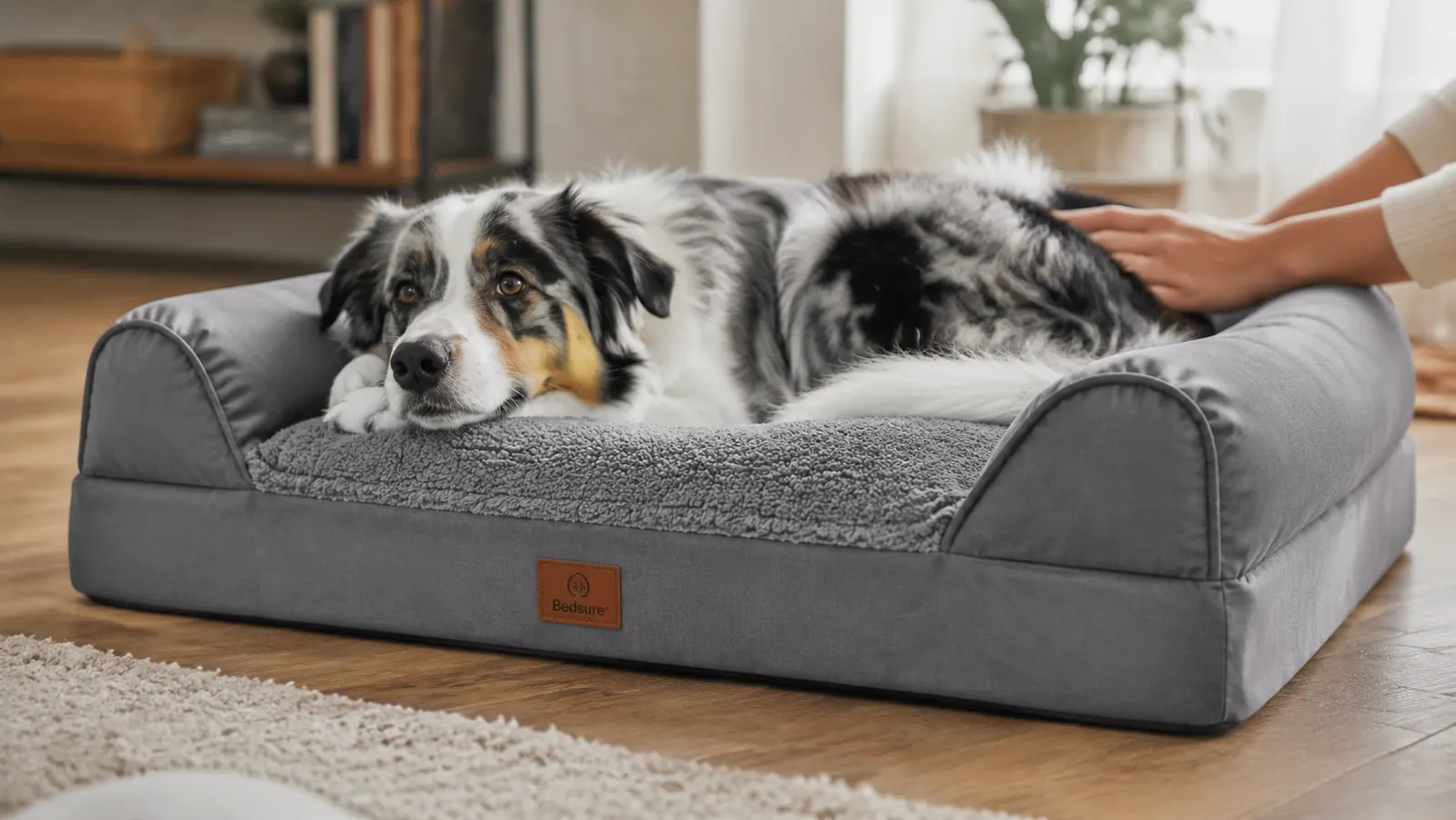
The gap between the two is hiding inside the bed, where you cannot see it until you pick it up. A regular dog bed is usually stuffed with cotton batting or a soft, cheap foam. It feels wonderful for the first week or so. Then the dog lies down in the same spot every single night, and the fill packs down right there. That is exactly what happened to Pearl's old bed. It turned into a dent before I ever noticed.
An orthopedic bed trades that soft fill for a denser foam layer that is meant to hold its shape and cushion the joints instead of sinking underneath them. The Bedsure we ended up with has a solid foam block sitting under the cover. Pearl sinks in a little, the way you sink into an old couch, but she does not bottom out onto the floor. When she gets up, the bed springs back instead of holding her shape. That is the whole point in one honest sentence. It does not turn into a dent.
The First Few Nights
The first night was not magic, and I am not going to pretend it was. Pearl sniffed the new bed for a good five minutes, walked around it twice, and looked at me like I had rearranged her kitchen. But she lay down, and she did not circle. She found her spot, turned once, and was out. The circling mostly stopped within that first week, which genuinely surprised me. I expected her to need time to get used to it. She just needed a bed that did not hurt to lie on.
The mornings were the real tell. On the flat bed, Pearl would stand up, stretch, and shuffle stiff for her first few steps across the kitchen. I want to be honest that this did not vanish. It is slower to leave than it was to come, and no bed cures arthritis. But she settles into her spot much faster now, and she rides out the morning more easily than she did before. For a dog living with stiff hips, that is a real, visible change. It is not a hope. It is what I watch every single day.
Where the Orthopedic Bed Wins
Everything I have described so far is the honest case for the orthopedic bed, so let me lay it out plainly. It wins on support, because it holds its shape instead of flattening where your dog lies. It wins for joints, because you want your dog cushioned, not resting on a packed-down dent. And it wins for older and bigger dogs, which is the only reason I bought one. The raised sides give Pearl somewhere to rest her head, and they make the bed feel safer to her. She curls against the edge like it is a small den, and she sleeps deeper for it.
It also wins on staying usable. Because the fill does not pack down the same way, an orthopedic bed tends to last longer before it goes flat. I am careful with claims like that, because I have only owned ours for close to a year. But the foam block has held its shape, and I can already see it is going to outlast every cotton bed that came before it. For the money, that is the part that changes the whole calculation.
On the flat bed she circled and huffed for five minutes. On the orthopedic bed she turned once and was out. That is the most convincing thing I can tell you.
Where the Regular Bed Wins
I am not going to pretend this is one-sided, because it is not. The honest win for a regular bed is the up-front price. A basic flat bed simply costs less, and there is no way around that. If your dog is young and healthy, or small, or sleeps soundly anywhere, spending the extra money is not necessary. My sister's terrier shredded three beds in a month as a puppy. For that dog, cheap was the correct answer, and I mean that sincerely and not as a sales line.
The other honest point is that some dogs do not care about the difference at all. My own cat Ruthie has slept on a folded towel in the laundry room for a year and would not thank me for a fancy bed. Some dogs, usually the easy resters, will be just as happy on a simple flat bed as on the nicest orthopedic one. If your dog is one of those, the support difference will not show up for you, and neither will your money's worth. There is no shame in that. Buy the cheaper bed and feel good about it.
Ready to give your joint-stiff dog a softer landing?
If your dog is starting to circle and settle with a huff the way Pearl did, the support difference is real. See what the Bedsure orthopedic bed goes for today before you decide.
Amazon Check Today's Price on Amazon →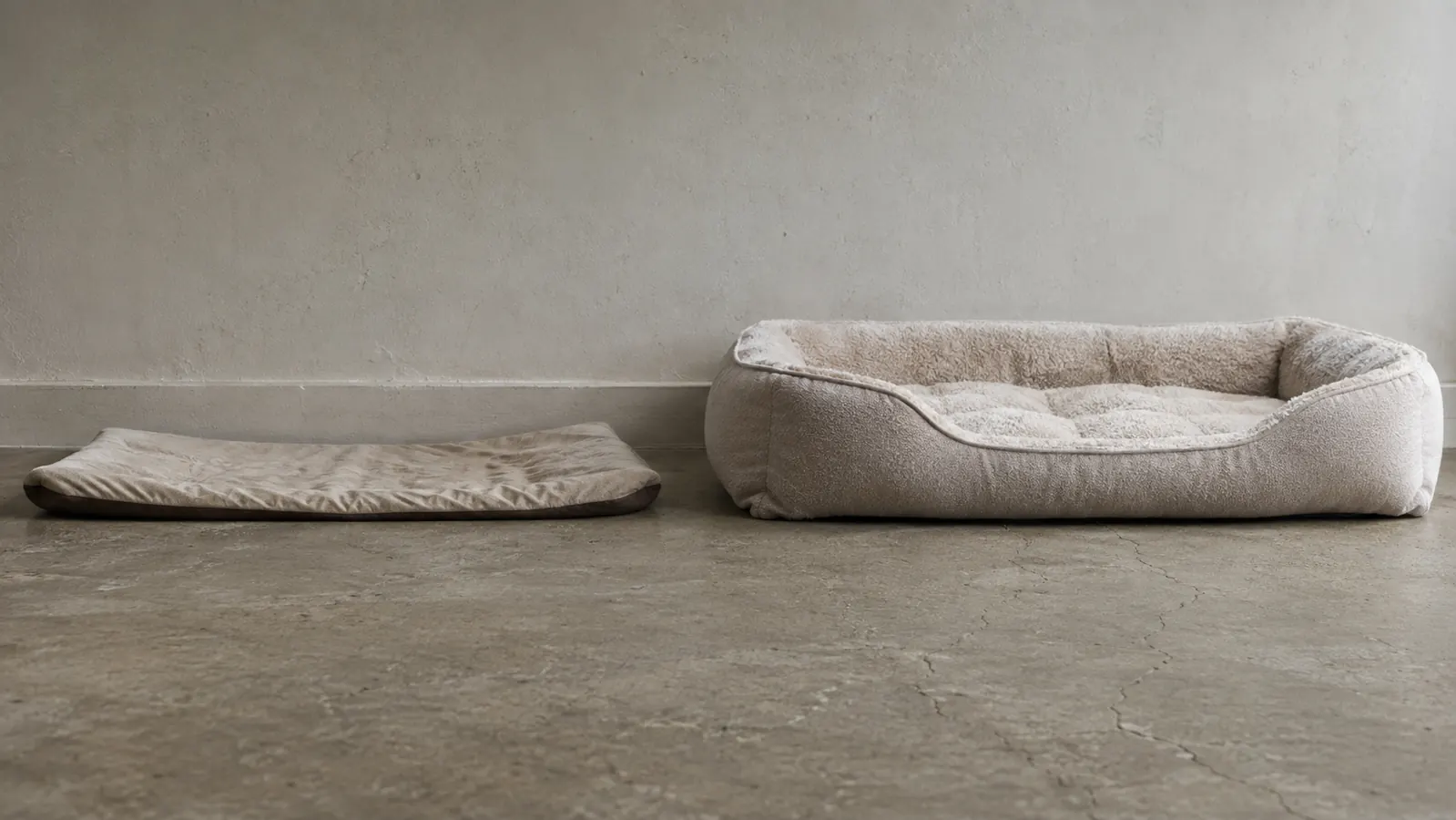
Washing and Care
This part surprised me, because it turned out to be half the value. The Bedsure has a removable, washable cover that zips off. That matters more than it sounds. Pearl sheds, she drags in dirt, and she has had the occasional accident. Being able to unzip the cover, toss it in the washer, and zip it back on clean is the difference between a bed you keep and a bed you eventually throw away. I wash the cover every couple of weeks and it comes out fine every time. It also means the bed does not build up that stale dog smell that old beds pick up, because the smell lives in the cover and the cover gets washed.
Not every orthopedic bed has this, so it is worth checking before you buy. A bed you can wash is a bed you will actually keep clean. A bed with a cover that does not come off is a bed that slowly collects everything your dog brings in, and that wears on everyone. For a practical person who does not want to baby her stuff, washability might be the single most useful feature on the whole thing.
Sizing, So You Do Not Get It Wrong
One thing that trips people up is size. An orthopedic bed, especially for a big dog, needs to be bigger than you think. Pearl is 71 pounds and mostly curls up, but she likes to stretch out when she is really tired. The large Bedsure gives her room to do both without hanging off an edge. If I had bought the bed that looked right sitting on the floor instead of the one sized to her, it would have felt like a mistake from the very first night.
My rule, after three dogs of my own, is to choose a bed your dog can stretch out flat on, not just curl up in. Measure your dog from nose to tail while she is lying down, then add a few inches. A bed that is a little too big is fine. A bed that is a little too small is a bed that dog will circle and huff on forever. That right there is the difference between a good buy and a regret, and it costs you nothing to get it right.
Who Should Buy Which
If you have an older dog, a large or heavy dog, a dog with diagnosed joint trouble, or a dog who has started circling and settling with a huff, the orthopedic bed is worth the extra money. That dog is quietly telling you the floor hurts, even if he will not say it out loud. That is the dog this bed is really for, and it is the reason I do not regret the upgrade for a single second.
If you have a young healthy dog, a small dog, or a dog who sleeps soundly on anything, a regular bed is the sensible buy, and I would not push you to upgrade. Keep the money for a good leash or a bag of treats. The orthopedic bed only earns its keep for a dog who actually needs the support, and the honest truth is that not every dog does. You are the one who knows which dog you live with.
The Money Question, Straight
Let me be practical about money, because that is how I think and I will not do it any other way. An orthopedic bed costs more up front than a flat bed, and I am not going to pretend otherwise. I checked today's price before I bought it, and yes, it is more than I used to spend on Pearl's old beds. But the flat beds kept going flat and I kept replacing them, so in the end I was buying a new dent every year or so. The orthopedic bed has already outlived that cycle for me. So if your dog is the kind who needs it, you are not really paying more. You are paying once.
The Bottom Line
If I had to sum this whole thing up for a friend across the kitchen table, it would go like this. Buy the orthopedic bed if your dog is older, heavier, or a little stiff, because that dog is living with the floor in a way you cannot see. Buy the regular bed if your dog is young, healthy, and sleeps like a rock anywhere, because the extra money would be wasted. Pearl is old and stiff and 71 pounds, so for us the orthopedic bed was not a splurge. It was the bed she had been asking for, quietly, for months. I am just sorry it took me that long to hear her.
If Pearl needed a bed today, this is the one
It is the first bed she stopped circling on, and it has held its shape for close to a year. If your older dog deserves the same, take a look at today's price on Amazon.
Amazon Check Today's Price on Amazon →