

If you have ever stood in the pet aisle reading the back of a dental treat bag and wondered whether you are paying for real cleaning or just a breath mint for dogs, you are not alone. I am Marilyn, and I have had dogs and cats my whole life. That used to be me, squinting at the fine print with a dog on a leash wrapped around my leg.
So let me be straight with you up front. Greenies are a real product that does a real job, and they are also not a replacement for brushing, and they cost more per day than you probably want to admit, and a small number of dogs should not have them at all. That is the honest version. If you want the whole story, the good and the parts that bother me, read on. I would rather you buy after knowing the truth than feel sold to and resent it later.
The Quick Verdict
A genuinely useful dental treat that cleaned my small dog's teeth noticeably, if you can live with the cost per treat and the chewy texture.
Amazon Check Today's Price →My dog's breath was the tell: it went from shy-away to neutral in about three weeks.
If you want a dental treat that more than 75,000 owners have rated well and that my vet has recommended for years, this is the one to look at.
Amazon Check Today's Price on Amazon -> →How I've Used It
My current little guy is Biscuit, an 8-pound poodle mix who has never met a treat he did not like and who has the small, crowded mouth of most small dogs. His dentist checkup two years ago came back with early tartar and the beginnings of gumline trouble in the back teeth. The vet looked at me over her glasses and said the same thing she says to every small-dog owner: brush if you can, and if you cannot, something has to do the scraping for you.
Biscuit will eat anything, but he will not hold still for a brush. After two weeks of morning wrestling matches that left us both cross, I gave up on the brush and started giving him one Teenie-size Greenie every morning, always the Chicken flavor because that is the one he runs for. I have now done this every single day for over six months, so this is a long-term report, not a first-week impression.
One honest note before the good stuff: the Teenie size is built for dogs 5 to 15 pounds, and Biscuit at 8 pounds is right in the middle of that range. If your dog is bigger, you need a bigger size, and if your dog is smaller than five pounds, I would talk to your vet before using these at all.

What It Actually Did for His Teeth
Here is the part that surprised me, because I am not easy to impress. By the three-week mark, the tartar on Biscuit's back teeth had visibly thinned. His breath, which I had honestly gotten used to, went from something I leaned away from to mostly neutral. I did not believe a chew could do that. I had tried rawhide strips and other chews over the years and saw nothing like this.
The reason it works is the texture. Greenies are softer than a bone but structured with little ridges and nubs that scrape against the teeth as the dog chews. That is how they clean to the gumline. The chewing action rubs the sides of the teeth and the area where the tooth meets the gum, which is exactly where my vet said his trouble was. It is not magic. It is just the mechanical scrubbing that a natural chew gives, done in a way dogs will actually finish.
The maker's own claim is cleaner teeth after 28 days, and from what I watched with my own eyes, that is an honest claim. He will still need a real cleaning someday. These treats slow the buildup, they do not stop it forever. But they moved his next dental visit from 'sooner rather than later' to 'we are fine for now.'
I watched the tartar on my dog's back teeth thin out by the third week. That is the single most specific result I can point to, and it is the whole reason these earn a place in my morning routine.
The Ingredients and What Gives Me Pause
I am not a nutritionist, and I do not pretend the ingredient list on a dog treat reads like a farmers market. Greenies are not a whole-food chew. They are a blend of wheat, glycerin, vegetable fiber, and a handful of other ingredients that are there to hold the shape and the texture. If you are the kind of owner who reads every label and feeds only single-ingredient treats, this is not that product, and you should know that before you buy.
The glycerin and the wheat are the two ingredients I pay attention to. Glycerin is a softener and a sweetener that keeps the treat pliable, and it is also why the texture works for chewing. Wheat is a common filler, and if your dog has a wheat or grain sensitivity, these are probably not for them. I have read the allergy and sensitivity complaints myself, and they are real, even if they affect only a minority of dogs.
There is also the choking and blockage risk, which I cannot in good conscience skip. Greenies have a warning on the bag for a reason. A dog who inhales food without chewing, or a dog who bites off a chunk and swallows it whole, can choke on a piece or get a blockage. Biscuit is a proper chewer and I watch him anyway, every single morning, because this is a real risk and my dog matters more than my convenience. I would say the same to you: if your dog is a gulper, do not leave them alone with one.
The Cost, Honestly
Here is where I am most plain with you, because money matters and nobody else seems to be straight about it. At the current price for the 130-count box of Teenies, each little treat works out to roughly a quarter. So that is about a quarter a day for one small dog. That does not sound like much until you realize it is spending real money on what is, at the end of the day, a treat.
I try to catch the box on sale and buy the bigger count when I do, which brings the per-treat cost down. But if you buy one box here and one box there at full price, the cost adds up over a year. I want you to go in with your eyes open about that, because it is the most common reason people feel these are overpriced once they have them at home.
Is it worth it? For me, yes, because I found a way to clean my dog's teeth that he will actually sit still for, and that has meant fewer worries at the vet. For a household watching every dollar, I would not blame you for choosing something else or for putting the effort into brushing. Both are honest choices.
The Sizes, the Calories, and Matching Them to Your Dog
Greenies come in a range of sizes, and getting the right one is not a small detail. There are sizes for tiny dogs, small dogs, medium dogs, large dogs, and extra-large dogs, and each has a calorie count printed right on the bag. The Teenie treats I give Biscuit run in the ballpark of 25 to 30 calories each, and the exact number is on the package so you can check it for yourself.
Calories matter more than people think, which is why I am bringing them up in an honest review instead of hiding them. A dental treat is still a treat, and a handful of owners feed one to a small dog on top of a full daily ration and then wonder why the scale creeps up. For an 8-pound dog like Biscuit, one Teenie a day is a reasonable addition, but I account for it and I would never stack a second one on top without trimming something else.
And please match the size to the dog. A Teenie meant for a small mouth will be gone in three bites from a large dog, which does no cleaning at all, and a large-size treat given to a small dog can be too much to chew safely. If you are between sizes, I would err toward the smaller one and let your dog chew it fully. That is the difference between a treat that helps and a treat that is just wasted money.
Giving Them Safely
I have given biscuits and chews for decades, so I have a short list of habits that keep things safe, and I will pass them along because they have saved me more than once. First, I give the treat only when I can watch. That rules out leaving a bowlful out all day or handing one over on my way out the door. Second, I make sure the right size is paired to the dog so it gets chewed, not swallowed. Third, I have fresh water down, because these treats soak up moisture as they break down.
I also keep a rule about fresh food and water being handy, and I treat the first few times carefully with a new dog. A dog who has never had a Greenie should be introduced slowly, one half treat, watched the whole time, before you trust a full one. If your dog has a sensitive stomach or has had surgery or trouble swallowing, check with your vet first. That is not me being a worrier. It is the difference between a routine that is safe and one that is a gamble.
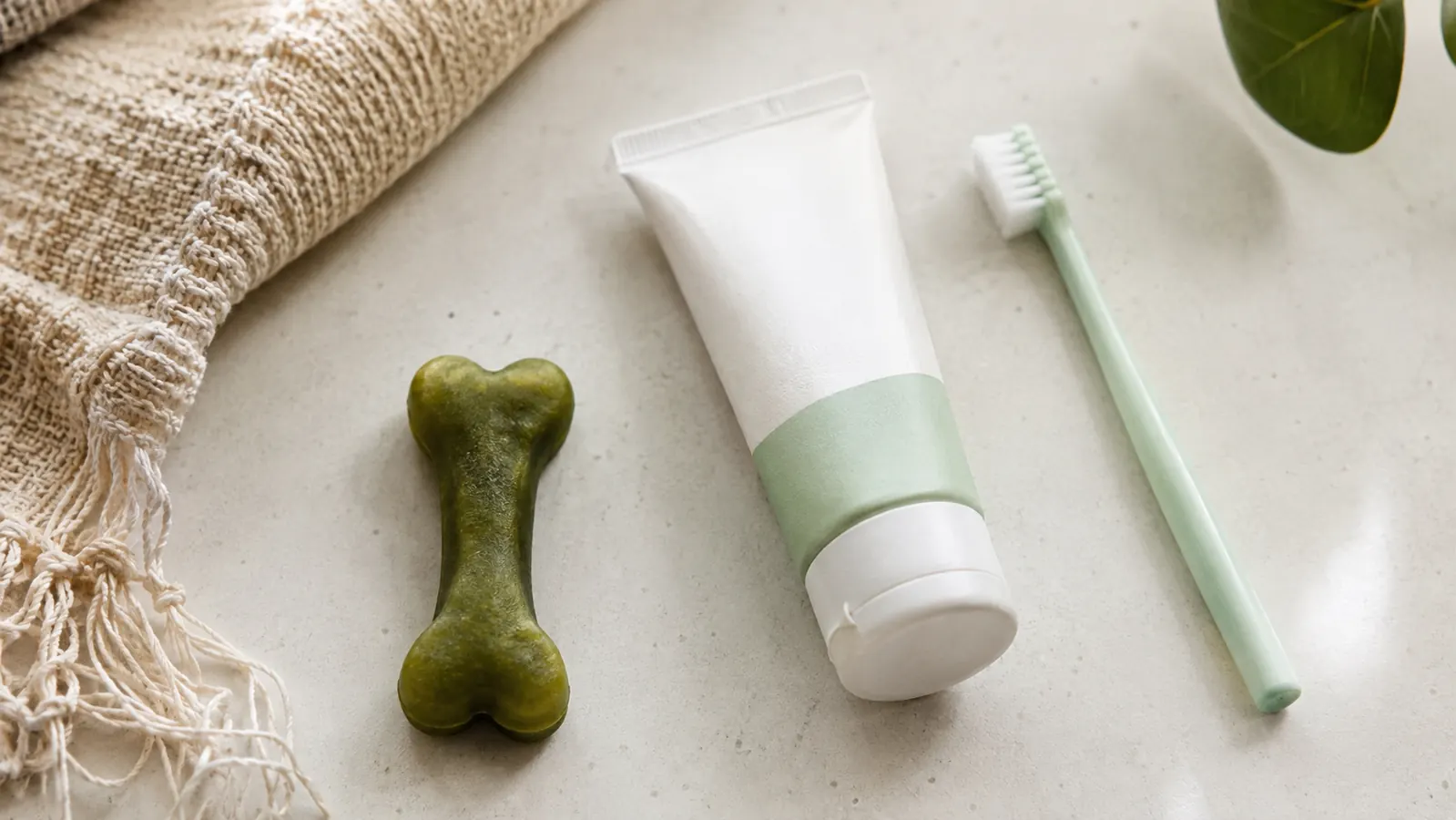
The Pros and Cons
What I Liked
- Visibly thinned tartar on my dog's back teeth within about three weeks
- Breath went from noticeable to mostly neutral, which was a real improvement
- Vet-recommended and backed by more than 75,000 ratings
- My small dog genuinely likes them and finishes every one
- Natural mechanical cleaning that reaches the gumline
- Easy to add to any morning routine, no brushing battle
Where It Falls Short
- Roughly a quarter per treat at current pricing, which adds up fast
- Contains wheat and glycerin, not a clean single-ingredient chew
- Real choking and blockage risk for dogs who gulp instead of chew
- Not a replacement for a real dental cleaning or brushing
- Does not suit wheat-sensitive, very small, or gulping dogs
Why Not the Cheaper Chews
I have tried the budget dental chews, so let me save you the experiment. Most of them are either too hard, so the dog loses interest and the whole thing goes in the yard, or too soft, so it is basically a cookie that does no real scraping. And some of the hardest chews, like the ones that claim to clean everything, are the very ones my vet told me to avoid because they can crack teeth. That is the trade I am not willing to make to save a few cents a day.
The reason Greenies sit at a higher price is that the texture is engineered to clean while the dog still enjoys it. The chew has the right firmness to scrape without being hard enough to damage teeth, and it is soft enough that a dog will actually finish a whole one. That balance is most of what you are paying for. Whether that premium is worth it for your dog and your budget is a call only you can make.
If you want to see how Greenies stack up against the other big name in dental chews, I have compared them side by side in my Greenies versus Dentastix piece. Short version: it comes down to your dog's size and how enthusiastic a chewer they are.
Who This Is For
This is for the small-dog owner whose dog will not let a brush anywhere near their mouth, or who has tried the whole brushing routine and given up on it like I did. If your dog is a proper chewer who finishes food slowly, and you do not mind the cost per day, these are a genuinely useful addition to your routine. They are also sensible if you do not want to be surprised by the bill at your next dental checkup.
Who Should Skip It
Skip these, and skip them without guilt, if your dog is a gulper who swallows food without chewing. The blockage risk is not worth it for any treat. Skip them if your dog has a wheat or grain sensitivity, because the wheat is right there in the ingredients. And skip them for a dog under five pounds, where the Teenie size is already too big. For those dogs, a soft toothbrush and dog toothpaste, done a little at a time, is the kinder path.
The Bottom Line
Here is my honest bottom line after more than six months of daily use. Greenies work, and they work on the thing that actually matters, which is the tartar and the gumline where my vet's concern started. They are not a substitute for brushing or for a real cleaning, they are not a clean single-ingredient chew, and at roughly a quarter a day they are not cheap. But for a dog like Biscuit who will never sit still for a brush, they are the difference between letting the teeth go and tending to them every single morning.
Would I buy them again? Yes, and I have. Would I hand them to every dog owner I meet? No, because some dogs should not have them, and every owner deserves to know why. That is the honest version, and it is the version I would want if the tables were turned and you were telling me about a treat you fed your dog every day.
If you and your dog are done with the brushing battle, a dental treat that actually works is the next thing to try.
I recommend checking the current price on the 130-count box and, if you can catch a sale, buying the bigger count. Your money, your dog, your call.
Amazon Check Today's Price on Amazon -> →