
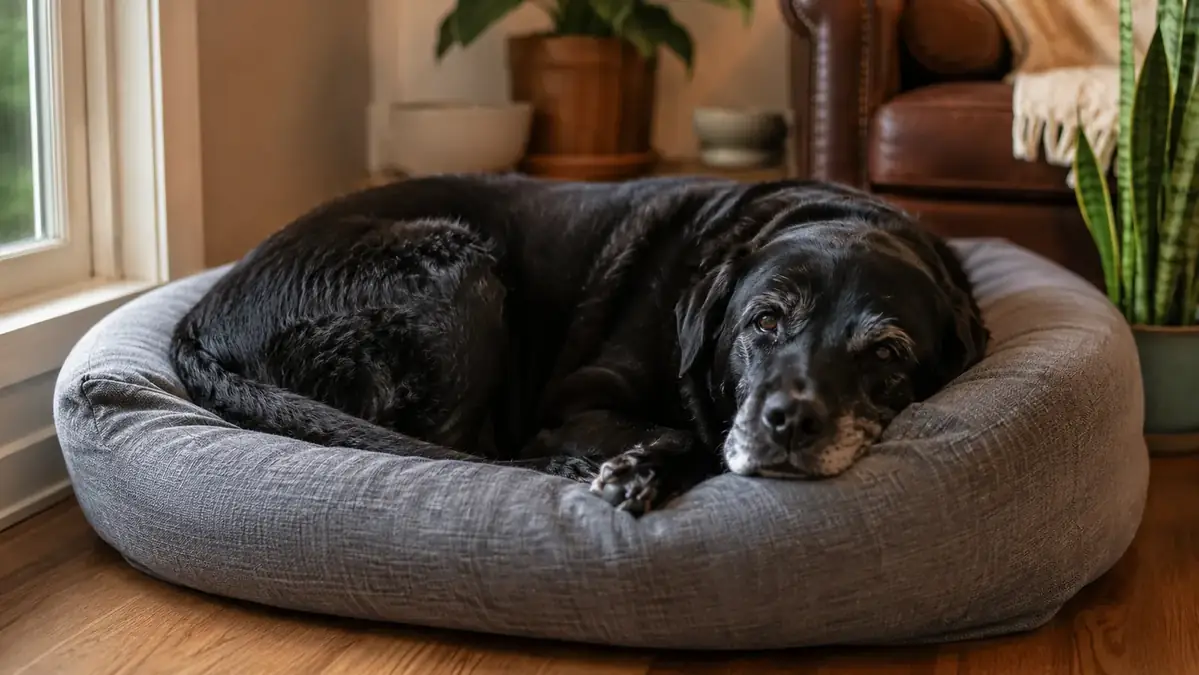
My Rocky is a twelve-year-old black Lab, seventy-eight pounds, with a touch of arthritis in his back hips that my vet first mentioned two years ago. For most of his life he would sleep on anything, a rug, a tile floor, the corner of the couch. He never cared. Then, around the time he turned eleven, that changed. He started circling a spot on the floor a few times, giving up with a sigh, and lying down in a way that told me he was not comfortable, just tired. He would get up stiff, take a few slow steps, and come right back down. That is when I faced the truth: my old dog needed a real bed, and I had bought maybe four beds in his lifetime that he would not even look at. The one that finally changed everything is an orthopedic bed from Bedsure, and I want to walk you through how I chose it so you do not waste the money the way I did.
Here is the thing nobody tells you about picking a bed for an old dog. It is not about picking the softest, fluffiest, or most expensive option. It is about support, and support is the opposite of soft. A senior dog's joints ache the way an older person's do, and a thick pillow that lets him sink to the floor underneath is exactly the wrong thing. I went down this road the hard way, bought the wrong beds, watched him ignore them, and finally sat down and did it properly. What follows is the exact method I used. I want to save you the wasted money and the wasted nights.
Before you buy a single bed, measure your dog lying down, not standing up.
The Bedsure orthopedic bed I ended up with is the one Rocky settled into within the first ten minutes and has used every night since. Firm memory foam he does not sink into, washable cover, and a size I chose by measuring him the way I show below.
Amazon Check Today's Price on Amazon →Step 1: Measure your dog lying down, and do it twice
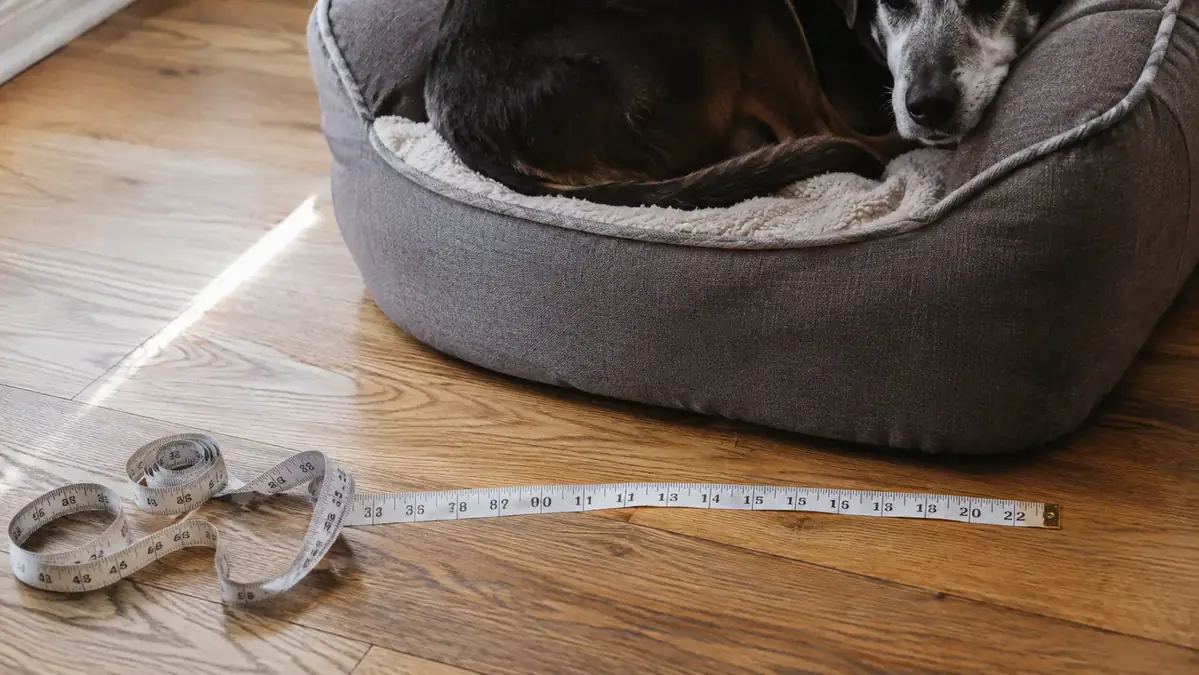
Every bed I ever bought Rocky was guessed. I held a picture of a big Lab next to a size chart, nodded, ordered a large, and it never fit the way he actually sleeps. The fix is boring and it works. Have your dog lie down in his normal sleeping position, curled up the way he really settles at night, and run a soft tape measure from the top of his head to the base of his tail. Write that number down. Then have him stretch out flat on his side and measure nose to tail again. Those two numbers tell you the range you are working with.
Do not buy based on the weight range on the box. Two dogs of the same weight can be completely different lengths, and a Lab is built longer than a lot of dogs his weight. I measure Rocky lying down because that is how he uses the bed. He curls for naps and stretches out on his side all night, so I needed a bed that covered the longer of the two measurements. The biggest trap is buying the size that looks right in the picture and ignoring your own dog's real stretched-out length.
One more thing here. If your dog is a stretcher, give yourself some extra room. An old dog with sore hips does not want his feet hanging off the edge of his bed any more than you want your feet dangling off the end of your mattress. I measured Rocky at about thirty-four inches stretched out, so I went with the large Bedsure, which gave him a little margin on every side. That extra few inches is what made the difference between him using it and him sleeping on the floor next to it.
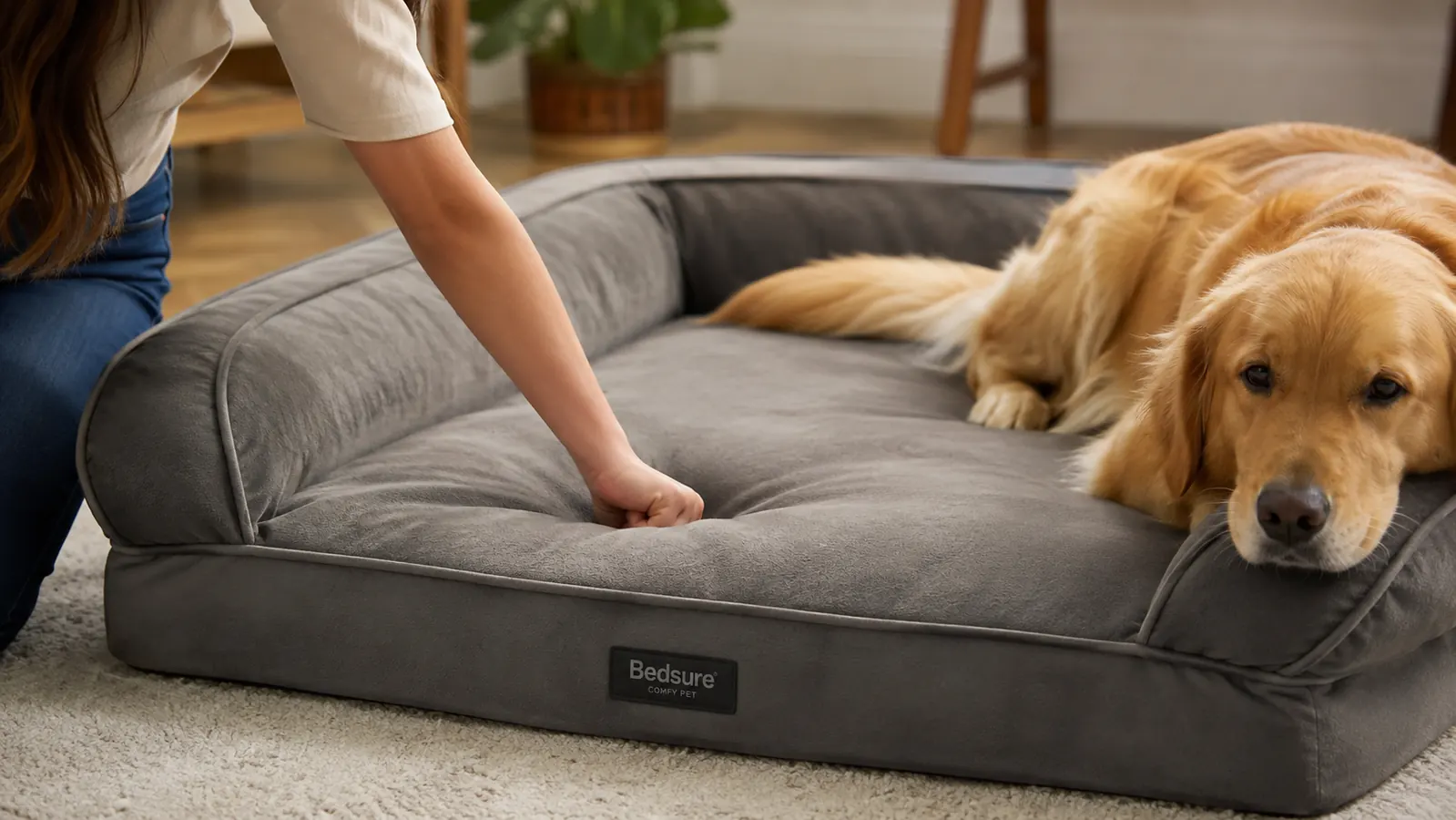
Step 2: Choose firm memory foam over fluffy pillow filling
This is the step that matters most, and it is where I got it wrong for years. A soft, fluffy bed feels lovely to us when we press a hand into it, but a dog lying on top of it does not feel that. His weight presses down, the filling flattens beneath him, and he ends up with the hard floor right there under a thin layer of stuffing. For an old dog with joint pain, that is not comfort, it is a thin pad over a hard surface. What he needs is support, something that holds his weight up so his hips and spine are not bearing the brunt of it all night.
Orthopedic is a word people throw around a lot, so let me be plain about what to actually look for. You want a dense foam core, the kind that springs back slowly when you press a knuckle into it instead of collapsing and staying collapsed. When I put my hand in the middle of the Bedsure and pushed down, the foam resisted and came right back. That firm surface is what keeps Rocky's hips from sinking all the way to the floor. If you can press your palm into the bed and feel the floor through it, it is too soft for an old dog, no matter how plush it looks.
Watch your dog the first few nights once you do get a firmer bed. Rocky's first reaction told me everything I needed to know. Instead of circling and giving up with a sigh, he stepped onto it, turned around twice, and lay straight down, no hesitation. The reason it plays out that way is that a firm, supported surface lets a stiff dog change position without hauling himself out of a deep divot. I go into more of the why behind this in my piece on the ten reasons senior dogs need an orthopedic bed, if you want the full picture before you spend the money.
Step 3: Get a cover you can actually wash, and take it off before you need it
An old dog brings a few realities with him. He may leak a little if he has a weak bladder. He may drag in dirt from the yard. He sheds, and he drools. If you pick a bed with a cover that does not come off and go in the washing machine, that bed is going to end up ruined or smelly, and you are going to have to throw it out and start over. I have been there. A washable cover is not a nice extra, it is the difference between a bed that lasts years and one that lasts months.
Check two things before you buy. First, does the cover unzip cleanly and come all the way off, and second, can it survive the washing machine without the zipper breaking after two washes. The Bedsure I have has a removable cover and a waterproof liner underneath the foam, which matters more than you might expect. The liner means a small accident stays out of the foam itself, so the whole bed does not have to be junked for one slip-up. That waterproof layer under the removable cover is the quiet feature that has saved this bed more than once.
Set yourself up for success on the first day, not the first accident. Take the cover off and wash it once before you even give the bed to the dog, so you know the zipper works and you know the fabric survives. Then you are not learning the washing machine routine in the middle of a mess at ten o'clock at night with a dog who has just soaked his bed. Planning ahead on this one thing saves a lot of stress, and it is the kind of practical detail that, for me, made this bed worth keeping over simpler ones.
Step 4: Match the shape to how your dog actually sleeps
Dogs sleep two different ways, and the right bed shape depends on which one your dog is. Rocky is a head-on-the-bolster kind of dog. He likes to rest his chin on something raised while he sleeps, the way you might prop a pillow. For a dog like that, a bed with raised sides around the edge gives him that spot to rest his head, and the sides also make him feel a little held in, which settles a lot of older dogs. When I look at Rocky curled against the padded edge of the Bedsure, I can see it is doing what a pillow does for me.
But not every dog wants that. Some dogs are sprawlers who like to stretch out flat with all four legs out, and for them a raised bolster just gets in the way, so a flat orthopedic pad without tall sides is the better match. Watch your dog closely for two or three nights, actually notice which way he curls up and where he tries to rest his head, and buy the shape that fits that habit. Buying the most popular shape because it looks nice in a listing is how I ended up with beds Rocky ignored. Watch the dog, not the picture.
Step 5: Put it where he already sleeps, and give it a week
The best bed in the world will not help if it is in the wrong room. An old dog is set in his ways, and he has already decided where he likes to be, usually wherever you are. Rocky has always slept beside my reading chair, so putting his new bed anywhere else meant giving him a bed in a spot he was never going to use. I put the Bedsure in the exact place he had been lying on the floor, and because it was already his spot, he stepped onto it the same afternoon and has stayed there ever since.
Finally, give it a real week before you judge it. A brand new bed smells different, feels different, and an old dog can take a few days to decide it is safe. If he ignores it for the first night or two, do not panic and do not immediately send it back. Leave it where he already sleeps, maybe put a shirt or a blanket that smells like you on top of it for the first couple of days, and let him warm up to it. If he still will not use it after a full week, then you have learned something real about his preferences, and that is information worth having before your next try.
What Else Helps
A good bed is the foundation, but a few other things made Rocky more comfortable once the bed was right. A soft fleece throw on top gives him something to shift against, and because it is thin and washable it is easier to throw in the machine than the whole bed cover. I also learned his hips and legs do better with consistent habits, keeping him at a steady weight, gentle short walks instead of long ones, and a warm, draft-free corner for his bed. None of this is medical advice, but as a dog owner who watches him every day, these small things are where I saw the most day to day change.
I will be honest about the limits, because I think candor matters more than a sale. An orthopedic bed is not going to cure arthritis or replace what your vet prescribes, and if your old dog is genuinely struggling to get up, a bed is not the fix for that. What the right bed does is give him a supported place to rest, so the aches are not worse every morning. If you want the full, straight talk on where this kind of bed helps and where it does not, including who might be better off with a cheaper option, my honest orthopedic bed review lays all of it out, the good along with the drawbacks.
One thing I want to leave you with, and it is the reason I wrote all this down. My Rocky does not have a lot of years left, and I want the ones he has to be as easy on him as I can make them. A firm bed with a washable cover in a spot he already loves is a small thing on its own, but it is the kind of small thing he feels every single night. He does not climb into it stiff and sigh the way he used to. He settles onto it, folds his gray muzzle over the edge, and goes to sleep. That is worth more to me than the money I wasted on every fluffy bed he ignored.
The first night Rocky stepped onto the firm foam, he turned around twice and lay straight down without a single sigh. He has not slept on the floor once since, and that is a change I can measure in how easily he gets up in the morning.
Pick a bed by support and your dog's sleep habits, not by the pretty picture.
The Bedsure orthopedic bed is the one that finally worked for my gray-muzzled Lab after years of beds he ignored. Firm foam he does not sink into, a washable cover with a waterproof liner underneath, and a size I chose by measuring him the way I showed you. Check today's price and give your old dog a supported night's rest.
Amazon Check Today's Price on Amazon →